Cryopreserved adipose tissue:
the interview with Dr Tatiana Tournieux
For Dr Tatiana, cryopreservation serves as a personal biological bank: a portion of the adipose tissue collected during an already planned liposuction procedure remains available for later needs, without requiring another full surgical collection procedure.
The most established application today is structural fat grafting, in procedures planned in stages. She emphasizes that the outcome depends on every step in the chain — collection, transport, processing, and storage — and that samples that do not meet the technical release criteria must not be used.
The interview
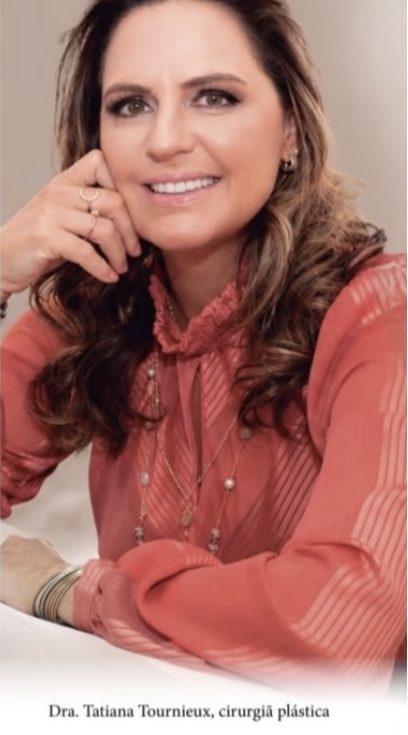
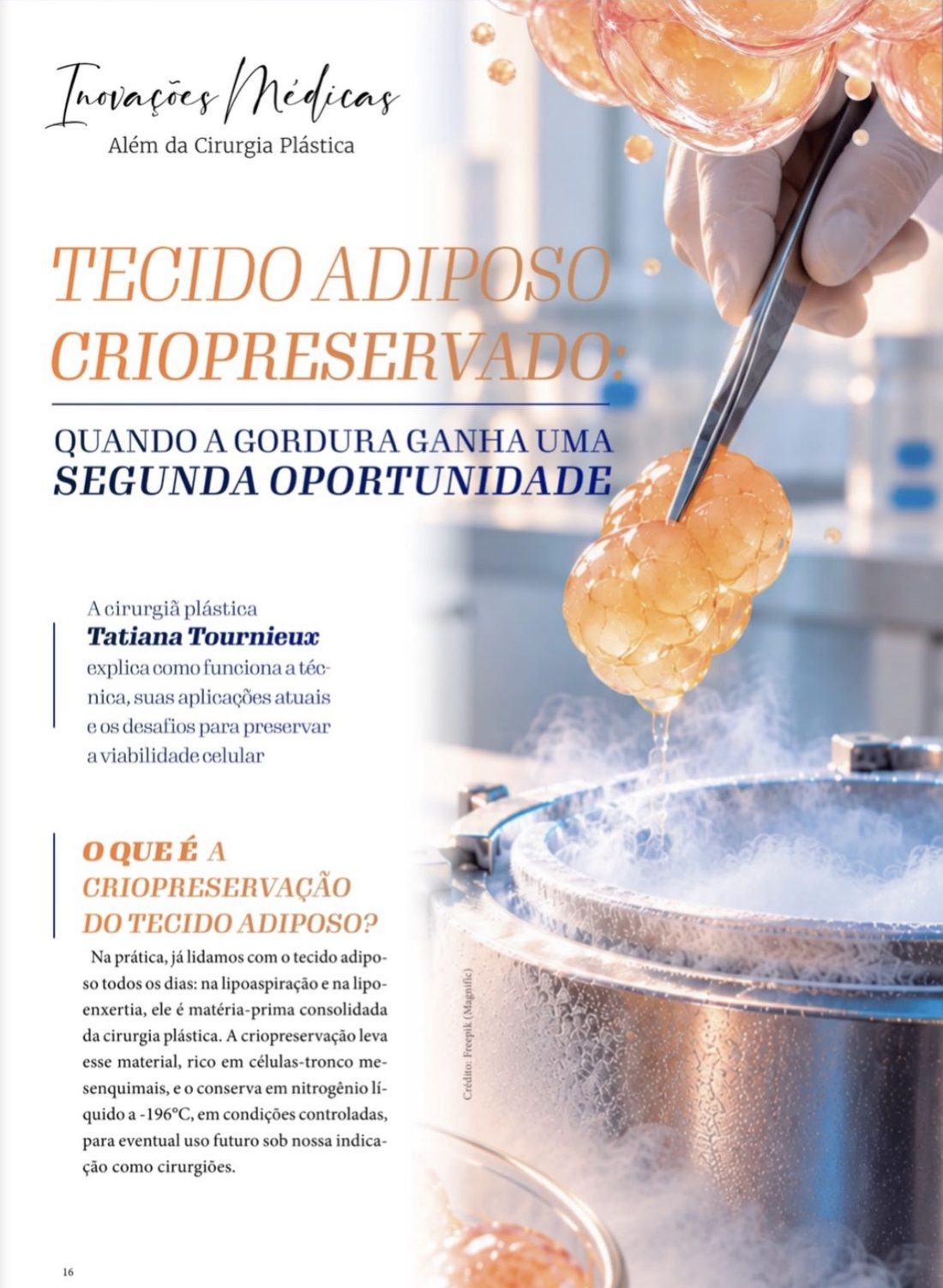
The feature “Cryopreserved adipose tissue: when fat gets a second chance” appears on pages 16 to 18 of the SBCP magazine. In a question-and-answer format, Dr Tatiana explores the topic from the basics to areas still under investigation.
She starts with a point every plastic surgeon knows: adipose tissue is already an established resource in the specialty, used daily in liposuction and fat grafting. Cryopreservation preserves this material in liquid nitrogen at –196 °C, under controlled conditions, for potential future use upon medical indication by the surgeon.
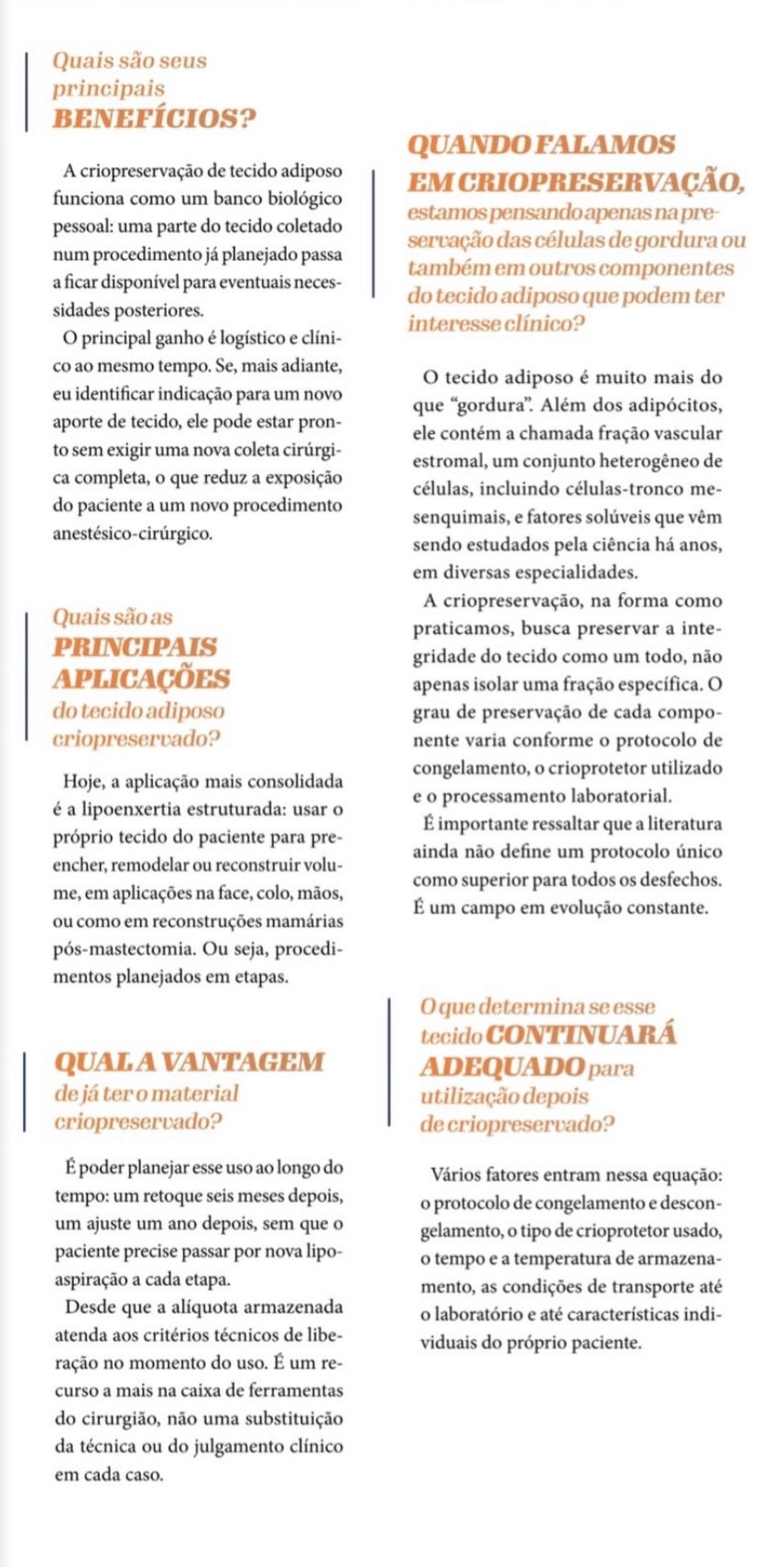
Benefits and applications, in the interviewee's words
According to Dr Tatiana, the main benefit is both logistical and clinical: if the surgeon later identifies an indication for additional tissue, the material may be ready, reducing the patient's exposure to another surgical procedure under anesthesia.
- Most established application: structural fat grafting — using the patient's own tissue to fill, reshape, or reconstruct volume in the face, décolletage, and hands, or in post-mastectomy breast reconstruction.
- Planning over time: a touch-up six months later, an adjustment a year later, without another liposuction procedure at each stage — provided the stored aliquot meets the technical release criteria at the time of use.
- More than “fat”: in addition to adipocytes, the tissue contains the stromal vascular fraction (SVF) and soluble factors that have been studied for years. The literature has yet to identify a single protocol as superior across all outcomes.
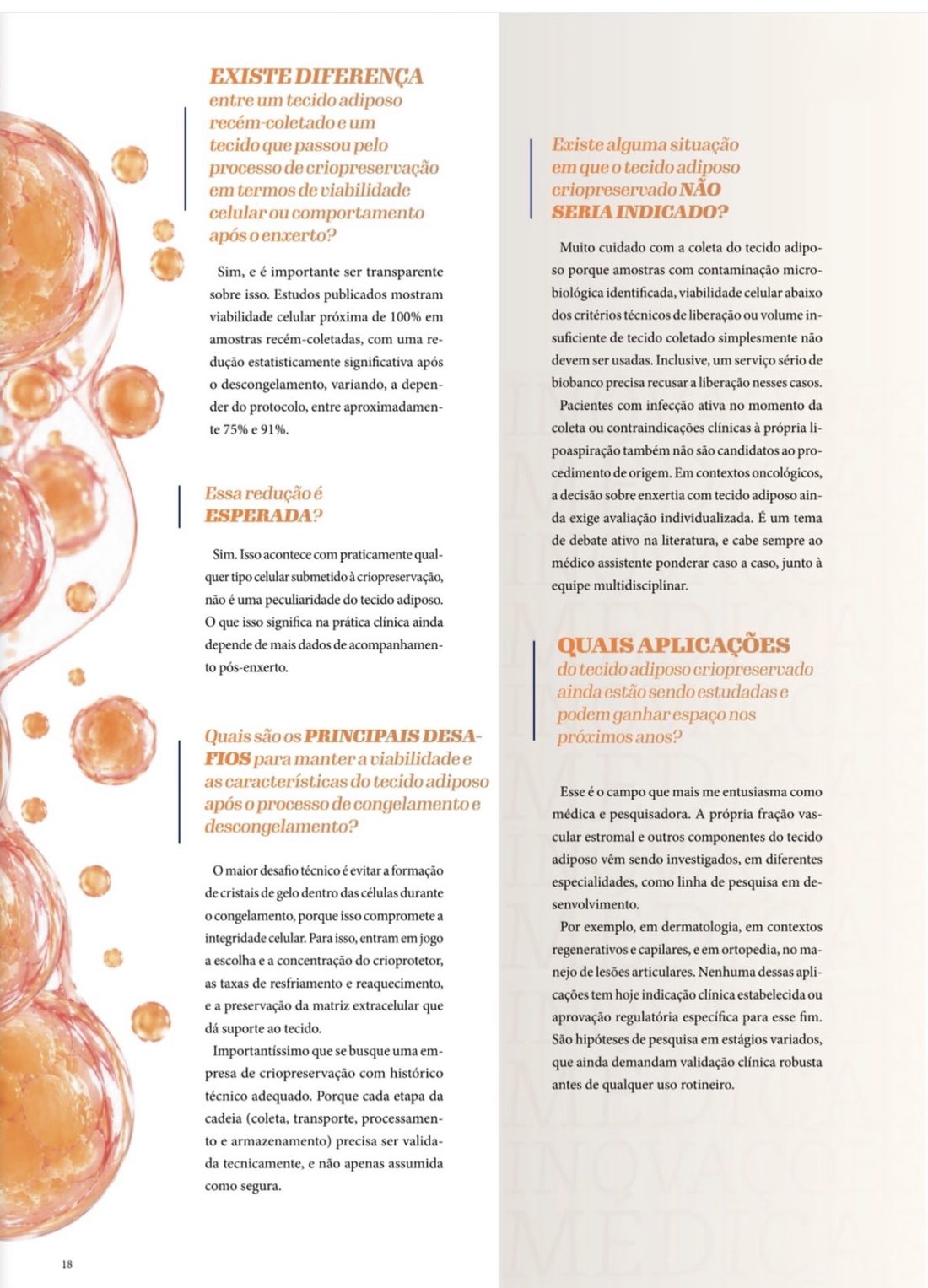
Viability, challenges, and when not to use the material
The interview is transparent about the limitations. Dr Tatiana cites published studies reporting cell viability close to 100% in freshly collected samples and a statistically significant decline after thawing, to approximately 75%–91%, depending on the protocol. She notes that this decline is expected in virtually any cryopreserved cell type, and that its clinical significance still requires further follow-up data.
According to her, the greatest technical challenge is preventing ice crystals from forming inside cells during freezing. This involves the cryoprotectant and its concentration, cooling and warming rates, and preservation of the extracellular matrix. Hence her recommendation to choose a cryopreservation company with an appropriate technical track record, where every step is technically validated, “and not merely assumed to be safe.”
Samples with identified microbiological contamination, viability below the technical release criteria, or insufficient volume must not be used — and, in the interviewee's words, a responsible biobanking service must refuse to release them in these cases.
Patients with an active infection at the time of collection or contraindications to liposuction itself are not candidates. In oncology settings, the decision requires an individualized assessment by the attending physician together with the multidisciplinary team.
The stromal vascular fraction and other components of adipose tissue are being investigated in various specialties, including dermatology and orthopedics. The interviewee herself stresses that none of these applications currently has an established clinical indication or specific regulatory approval: they are research hypotheses that still require robust clinical validation.
Cryopraxis commentary: what this means for LipAge
The points raised in the interview are the same ones that guide the LipAge protocol. Without attributing any opinion about our service to the interviewee, we show how each is addressed in practice:
| Validated chain | A sterile LipAge kit for collection during liposuction, a documented chain of custody through to Cryopraxis's Cell Technology Center licensed by ANVISA (Brazil's health regulatory agency), and AABB accreditation since 2008. |
| Release criteria | Quality control (QA/QC) and LipAge Score before release. Microbiological contamination means outright rejection of the material, regardless of the other scores. |
| Use in stages | The autologous material is divided into aliquots specified by the client or physician, so that each planned stage uses only what is needed. |
| Clinical decision | Cryopraxis preserves and releases the material; future use takes place only upon medical indication, at the sole discretion of the attending physician. |
Dr Tatiana Tournieux gave this interview to the magazine of the Brazilian Society of Plastic Surgery. The pages reproduced in this newsletter retain their original credits. The comments about LipAge are from Cryopraxis and do not represent statements by the interviewee or the SBCP.
Source
- Tournieux T. Tecido adiposo criopreservado: quando a gordura ganha uma segunda oportunidade. Entrevista. Revista da Sociedade Brasileira de Cirurgia Plástica, seção Inovações Médicas — Além da Cirurgia Plástica, p. 16–18.
- Related LipAge scientific newsletters: No. 03 (contamination during lipoaspirate collection), No. 04 (longevity of cell cryopreservation), and the LipAge Score v1.0 special edition.